


What Is a Chock?
A chock is a simple wedge or block placed against a vehicle’s wheel to stop it from moving. You will usually see chocks near the wheels of trucks, trailers, or railcars, especially in loading and unloading areas.
Chocks help keep vehicles steady so workers can do their jobs safely.
Why Chocks Are Important
Even when a truck’s brakes are on, it can still move. This can happen because of slopes, vibrations, or brake failure. If a truck moves while someone is loading or unloading it, serious injuries can occur.
Using chocks helps prevent these accidents. That is why chocks are a basic safety requirement in many workplaces.
OSHA Rules for Using Chocks
OSHA requires trucks and trailers to be secured when they are being loaded or unloaded. This includes:
- Setting the brakes
- Placing chocks against the wheels
These rules help stop trucks from rolling forward or backward while workers are nearby.
OSHA regulations related to chocking can change over time, so it is important for workplaces to stay up to date.
Where Chocks Are Used
Chocks are used in many places, including:
- Loading docks
- Warehouses
- Fuel loading areas
- Rail yards
- Maintenance and repair areas
Any place where a vehicle must stay in one position is a good place to use chocks.
Truck and Trailer Chocks
For trucks and trailers, chocks are usually placed against the rear wheels after the brakes are set. If a trailer is disconnected from the truck, extra support like jacks may be needed along with chocks.
Modern truck chocks are easy to see, easy to use, and made for tough work environments.
Railcar Chocks
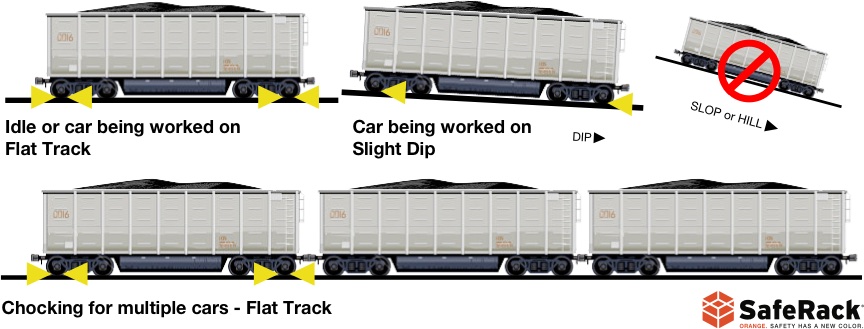
Railcars can also move if they are not secured. Railcar chocks or blocks are used to keep railcars in place during loading and unloading.
These chocks are often made from steel or strong urethane materials that can handle heavy weight and harsh conditions.
Modern Chocks vs. Old Methods
In the past, workers sometimes used wooden blocks to stop wheels. Today, this is not considered safe.
Modern chocks are:
- Strong and long-lasting
- Easy to spot because of bright colors
- Resistant to rust and weather
- Designed to meet safety standards
Using proper chocks helps keep operations safe and compliant.
Chocks in Heavy Industries
Some industries use very large vehicles, such as mining or construction. These vehicles can weigh hundreds of tons.
Special heavy-duty chocks are used in these cases. They are strong enough to hold the vehicle in place if the brakes fail.
Why Chocks Help Keep Workers Safe
The main job of a chock is to stop a vehicle from moving when it should not. This protects workers during loading, unloading, inspections, and repairs.
Using visible and reliable chocks is especially important in fuel and hazardous material areas, where safety risks are higher.
A chock is a block or wedge placed against a wheel to stop a vehicle from moving.
Chocks should be used during loading, unloading, parking, or maintenance work.
Yes. OSHA requires vehicles to be secured, and chocks are one way to do this.
They are usually placed against the rear wheels after the brakes are set.
Wooden blocks are not recommended. Modern chocks are safer and more reliable.