


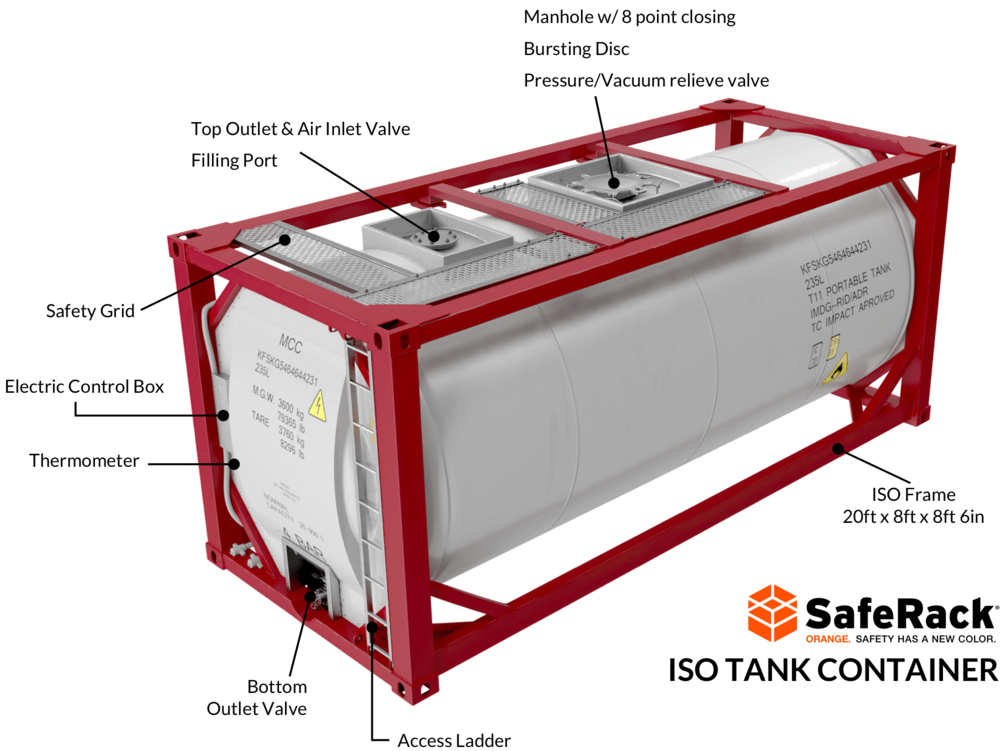
Isotainers – ISO Tank Containers are specialize containers use to transport bulk liquids safely and efficiently. ISO stands for the International Organization for Standardization, which defines global safety and design standards. As a result, Isotainers, ISO Tank Containers are certified for both hazardous and non-hazardous cargo across international transport systems. Therefore, they play a critical role in modern bulk liquid logistics.
How Isotainers, ISO Tank Containers Work
Isotainers operate using an intermodal system that allows liquids to remain inside the same container during transport.
- Stainless steel tank enclosed in a protective frame
- Standardized size for easy lifting and stacking
- Secure locking systems for stability
- Compatible with cranes and transport equipment
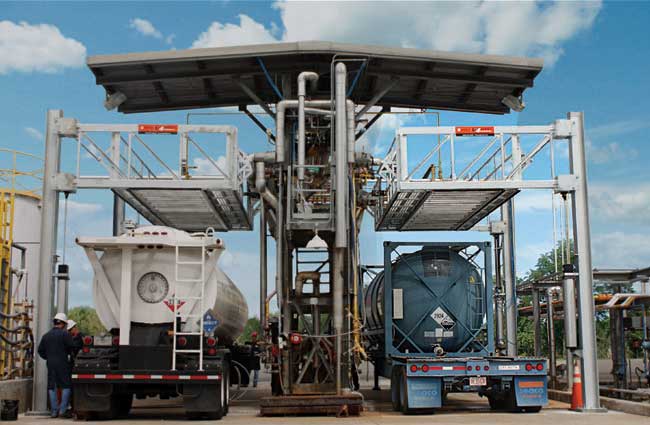
For example, facilities use railcar loading systems to transfer liquids efficiently. In addition, loading platforms provide safe access for operators. Moreover, gangways are commonly use to improve safe access during loading and inspection.
Applications
Isotainers – ISO Tank Containers are widely used across industries due to their flexibility and safety.
- Chemical transportation
- Fuel and petroleum logistics
- Food-grade liquid transport
- Pharmaceutical liquids
- Bulk import and export operations
In these environments, spill containment systems help manage leaks and protect the environment.
Benefits / Importance
Using Isotainers – ISO Tank Containers offers several major advantages:
- High Capacity: Over 24,000 liters per container
- Efficiency: Faster loading and unloading
- Cost Reduction: Lower shipping and handling costs
- Reliability: Certified to international ISO standards
- Durability: Long lifespan of 15–20 years
- Sustainability: Reduces use of drums and disposable containers
- Additionally, grounding monitoring systems ensure safe static control during transfer. Furthermore, overfill protection systems help prevent spills and accidents.
Stacking and Transport Efficiency
Another key advantage of Isotainers – ISO Tank Containers is their stackable design.
- Multiple tanks can be stacked on railcars
- Standard dimensions allow easy handling
- Faster logistics compared to traditional containers
Because of this, facilities often use terminal solutions to streamline operations. In addition, fall protection systems improve worker safety when accessing elevated tanks.
They are used to transport bulk liquids such as chemicals, fuels, and food-grade products safely across different transport modes.
They carry larger volumes, reduce handling costs, and are reusable, making them more efficient.
Yes, they are built and certified to meet strict international safety and performance standards.
They typically last between 15 and 20 years with proper maintenance and inspection.