


Scaffolding has been an essential part of construction since humans began building above ground level. OSHA defines scaffolding as an elevated temporary work platform designed to support workers, tools, and materials safely at height. Understanding OSHA scaffolding regulations is critical to preventing workplace accidents.
Types of Scaffolding Recognized by OSHA
1. Supported Scaffolding
Platforms supported by rigid, load-bearing elements such as frames, poles, legs, and pegs. Common types include:
- Fabricated Frame / Frame Scaffolding: Platforms supported on fabricated end frames with integral posts, horizontal bearers, and intermediate members.
- Ladder Jack Scaffolding: Platform resting on brackets attached to a ladder, ideal for light loads and portable setups.
- Mast Climbing Scaffolding (Mast Climbers): Supports heavier loads, providing a platform for personnel, tools, and materials at significant heights.
- Wood Pole / Pole Scaffolding: Wooden posts with fixed connection points for runners, bearers, and diagonals.
- Pump Jack Scaffolding: Platform supported by vertical poles with movable support brackets.
- Tube and Coupler Scaffolding: Platforms supported by tubing connected with couplers; highly customizable.
- Specialty Scaffolding: Platforms erected using tubing and couplers for specialized applications.
2. Suspended Scaffolding
Platforms hanging from ropes or non-rigid elements, often used for window cleaning, painting, or facade maintenance.
OSHA Safety Guidelines
OSHA identifies scaffolding as a high-risk area for workplace injuries, often caused by:
- Improper assembly or shoddy construction
- Inadequate fall protection
- Human error during use
Key OSHA Requirements:
- Platforms must support intended loads safely
- Guardrails, toe boards, and personal fall arrest systems are required
- Proper inspection and maintenance of scaffolding components
- Compliance with height, load, and stability standards
Failure to comply may lead to fines, legal liability, and serious injuries.
Modern Alternatives to Traditional Scaffolding
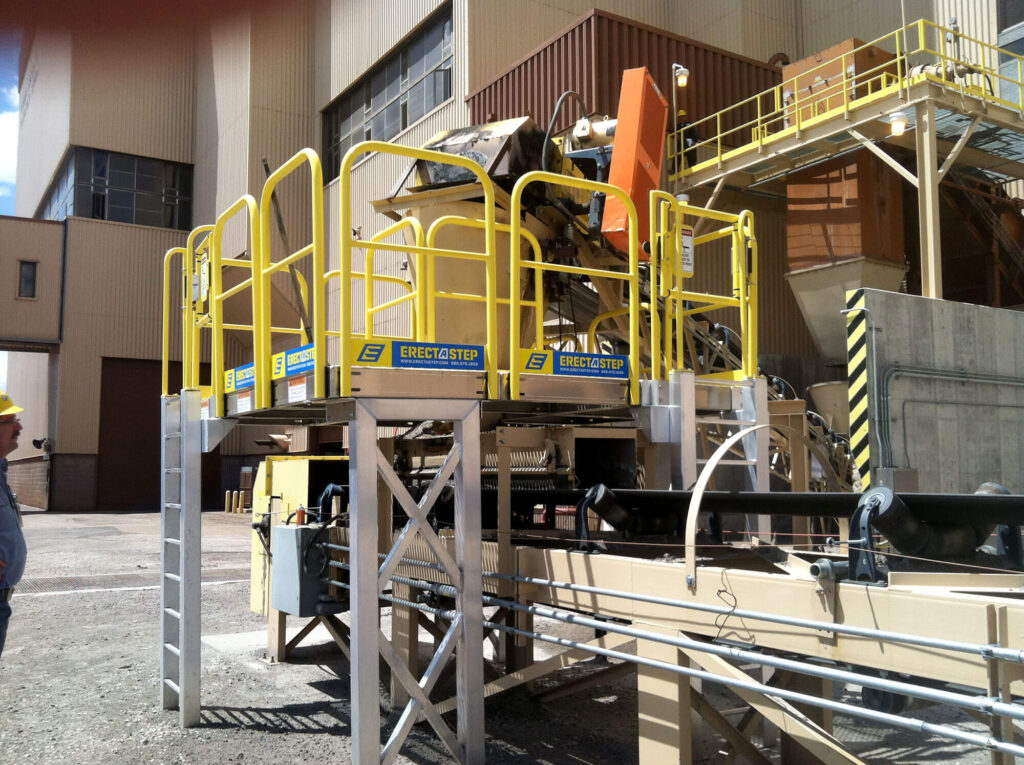
Modern modular work platforms provide OSHA-compliant alternatives with enhanced safety:
- Mobile work platforms: Easily relocated and height-adjustable for various tasks
- Fixed modular platforms: Stable and durable for manufacturing, maintenance, or production crossovers
- ErectaStep systems: Highly versatile, modular platforms reducing reliance on rental scaffolding
These systems improve fall protection, provide stable workspaces, and simplify construction and setup.
Saferack Solutions
SafeRack has over 20 years of experience helping companies implement safer raised work platforms. Services include:
- Consultation on OSHA-compliant scaffolding and modular systems
- Sale and installation of ErectaStep modular platforms
- Fall protection system integration
- Safety enhancement for temporary and permanent elevated workspaces
OSHA defines scaffolding as a temporary elevated work platform used to support workers, tools, and materials safely.
Supported scaffolding (frame, mast climbers, tube and coupler) and suspended scaffolding (rope or cable supported).
Falls, structural failure, and human error can cause injuries if OSHA standards for load, height, and fall protection are not followed.
Yes, modular systems offer immediate OSHA compliance, enhanced fall protection, and stability, reducing the risk of accidents.
Companies like SafeRack provide consultation, modular platforms, and safety solutions for commercial and industrial applications.