


Stair Railing Height refers to the vertical measurement from the stair tread to the top of the railing. It is a critical safety requirement in construction and industrial environments, ensuring that stairways provide proper support and protection for users. Maintaining the correct stair railing height helps prevent falls, improves accessibility, and ensures compliance with building and safety standards.
How Stair Railing Height Works
Stair railing height is determined based on safety guidelines and building codes. It is measured vertically from the leading edge of the stair tread to the top surface of the railing.
Key considerations include:
- Consistent Measurement: The height must remain uniform throughout the staircase.
- Code Compliance: Specific height ranges are defined by safety regulations.
- User Support: Designed to provide a secure grip and balance while ascending or descending.
- Proper Installation: Railings must be firmly secured to withstand force and usage.
Correct installation ensures that the railing performs effectively in both residential and industrial settings.
Applications
It is important in various environment where stairs are use:
- Commercial Buildings: Offices, warehouses, and public facilities.
- Industrial Sites: Factories and plants where worker safety is critical.
- Construction Projects: Ensuring temporary and permanent stair systems meet safety standards.
- Residential Buildings: Providing safe access within homes and apartments.
Railing Height Requirements at a Glance
Different regulatory bodies establish specific height requirements for handrails and guardrails to ensure safety across various applications:
| Code Body | Application | Handrail Height | Guardrail Height |
|---|---|---|---|
| OSHA | Industrial/Workplace | 30″ to 38″ | 42″ (±3″) |
| IBC | Commercial Buildings | 34″ to 38″ | 42″ minimum |
| ADA | Accessible Design | 34″ to 38″ | Not specified |
| NBC (Canada) | Residential | 34″ to 42″ | 36″ minimum |
| NBC (Canada) | Commercial | 34″ to 42″ | 42″ minimum |
International Building Code (IBC) Standards
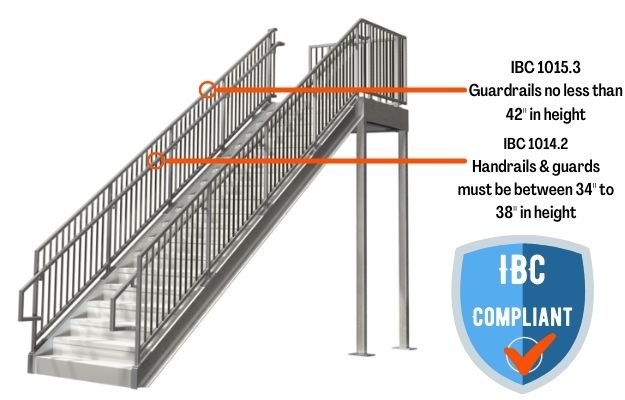
The IBC establishes strict requirements for commercial applications. Handrail heights must fall between 34 and 38 inches (854-965 mm), while guardrail heights must be at least 42 inches (1,067 mm). These standards apply to all commercial buildings open to the public and ensure consistent safety across different facilities.
For stairs to be IBC-compliant in height:
1014.2 – Handrail height must not be less than 34 inches (854 mm) or more than 38 inches (965 mm).
1015.3 – Guardrail height must not be less than 42 inches (1,067 mm) in height.
OSHA Standards
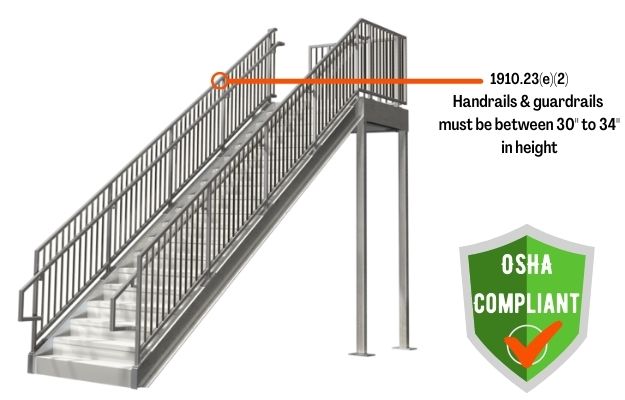
For industrial facilities, OSHA provides comprehensive requirements that SafeRack specializes in meeting. The regulations specify that stair rail systems must have a vertical height between 30 and 38 inches from the upper surface of the top rail to the surface of the tread.
Key OSHA requirements include maximum riser heights of 9.5 inches, minimum tread depths of 9.5 inches, and minimum stair widths of 22 inches. For platforms, runways, or stairs taller than 4 feet, guardrails become mandatory with no substitutions permitted.
OSHA stair requirements: 1910.23(e)(2) A stair railing shall be of construction similar to a standard railing, but the vertical height shall be not more than 34 inches nor less than 30 inches from an upper surface of top rail to the surface of tread in line with the face of the riser at the forward edge of the tread.
What’s the difference between the IBC and OSHA stair standards?
ADA Accessibility Requirements
The Americans with Disabilities Act (ADA) ensures stair railing accessibility for all users.
- Handrails must be installed on both sides of stairs and ramps
- Height must be between 34 and 38 inches
- For children, a second handrail at 28 inches max height is recommended
Proper stair railing design improves usability and inclusivity in public spaces.
Canadian NBC Stair Railing Guidelines
The National Building Code of Canada (NBC) defines stair railing requirements based on fall height:
- 36-inch guardrails for drops between 24 inches and 5’10”
- 42-inch guardrails for higher elevations
These stair railing standards ensure residential and commercial safety across Canada.
Critical Safety Considerations
Proper handrail and guardrail installation involves more than just height compliance. Rails must withstand at least 200 pounds of pressure applied from any direction, and the gripping surface must remain free of sharp or abrasive elements. Continuity is essential, handrails must be continuous within the full length of each stair flight without rotation in their fittings.
SafeRack’s Compliance Solutions
SafeRack’s comprehensive product portfolio ensures facilities meet all applicable safety standards. Our gangways, safety cages, and mobile access units incorporate OSHA-compliant designs while our on-site safety evaluations identify potential hazards and ensure proper railing heights. Through our proprietary configurator tool, we provide same-day 3D renderings with built-in compliance verification, eliminating costly engineering errors.
Installation Best Practices
To ensure effective stair railing performance:
- Maintain uniform riser heights and tread depths
- Provide proper landing space (30″ OSHA / 48″ IBC)
- Ensure consistent stair railing height throughout
Consistency is key to preventing trips and falls.
Avoiding Common Compliance Mistakes
Facilities often overlook critical details that result in violations. Common errors include using chains as guardrail substitutes, inconsistent handrail heights along runs, and inadequate clearance between handrails and walls. Regular inspections and preventative maintenance help identify issues before they become costly violations, which can reach $10,000 per occurrence.
Whether upgrading existing facilities or designing new installations, SafeRack provides the expertise, products, and services to ensure complete compliance with stair railing height requirements. Our Regional Area Managers conduct thorough assessments to optimize safety while maintaining operational efficiency, making SafeRack your trusted partner for fall protection solutions.
Benefits
Maintaining proper Stair Railing Height offers several advantages:
- Improved Safety: Reduces the risk of slips and falls on stairs.
- Regulatory Compliance: Meets building codes and safety requirements.
- Enhanced Stability: Provides reliable support for users.
- Injury Prevention: Helps protect workers and occupants in high-traffic areas.
Proper stair railing height is essential for creating safe and accessible stairways in any environment.
It is the vertical distance from the stair tread to the top of the railing.
OSHA: 42 inches ±3; IBC: minimum 42 inches; NBC Canada: 36–42 inches depending on application.
Proper railing height prevents falls, reduces injuries, and ensures compliance with safety codes.
Yes, it must comply with building codes and safety regulations to ensure proper protection.
SafeRack provides OSHA-compliant products, on-site evaluations, and 3D renderings to verify railing height and overall safety.